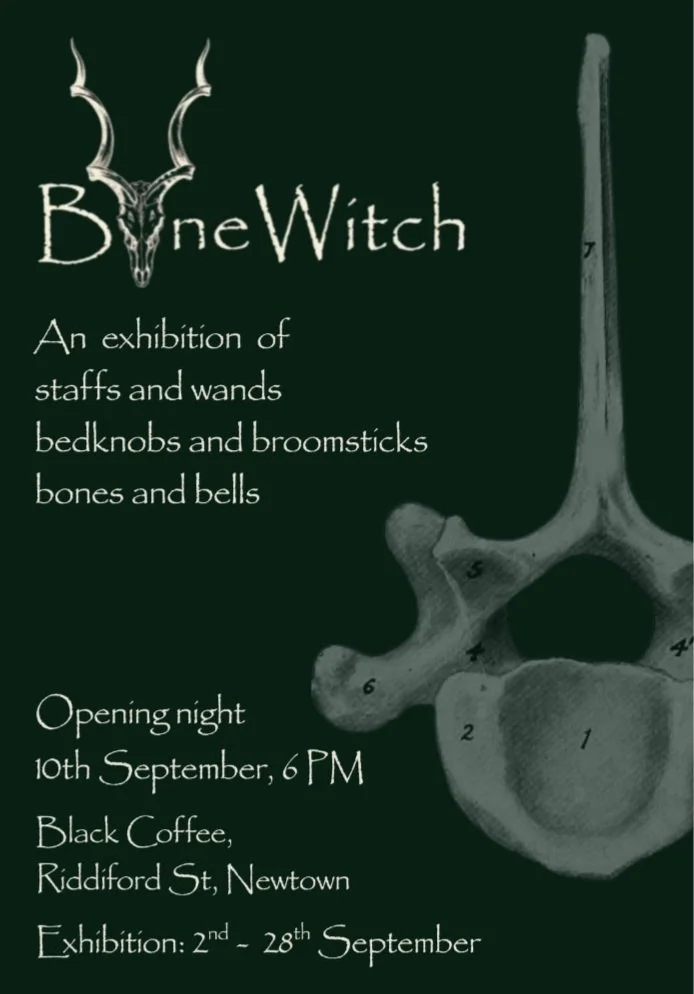
Bonewitch by Jo Phillips

In an old world

We look at the seasons

The rise and fall of water

The waxing and the waning

We observed in quiet and in wonder

We were cautious with what we didn’t understand

We were in awe of life

In awe of stars and flame and the moon

We had smooth edges to ourselves along with the rough

We endured

We left our stories on the stones , tucked into tree limbs, buried in soil, cast to water and burned in fires

We talked and sand and danced our histories

Our survival

Our endurance

Remember…

The harkening of the seed within

Blunted now perhaps by a modern world

The innate power and knowledge, scraped and erased

But still a glimmer remains

We are more than one thing

Than one skill

Than one life

Than one individual

We are more than a solitary person in the sea of One Persons

We are more than survival

In an old world, we clung together to endure

To thrive

We honoured the gifts and observations and teachings of others

And as we became bolder and cleverer and "better’

We cast out those same gifts, those teachers, those healers

We depended less and strove more

We are complex and contrary

The light and the dark

The best and worst lives inside of each of us

But…

I am you

You are me

We are part of everything and everything is part of us

Ubuntu - I am, because we are

Blessings from the Bonewitch

Message me any time to talk about bones, or wood or workshops or life or creating a community that walks together again.

toffee.jo @ gmail.com
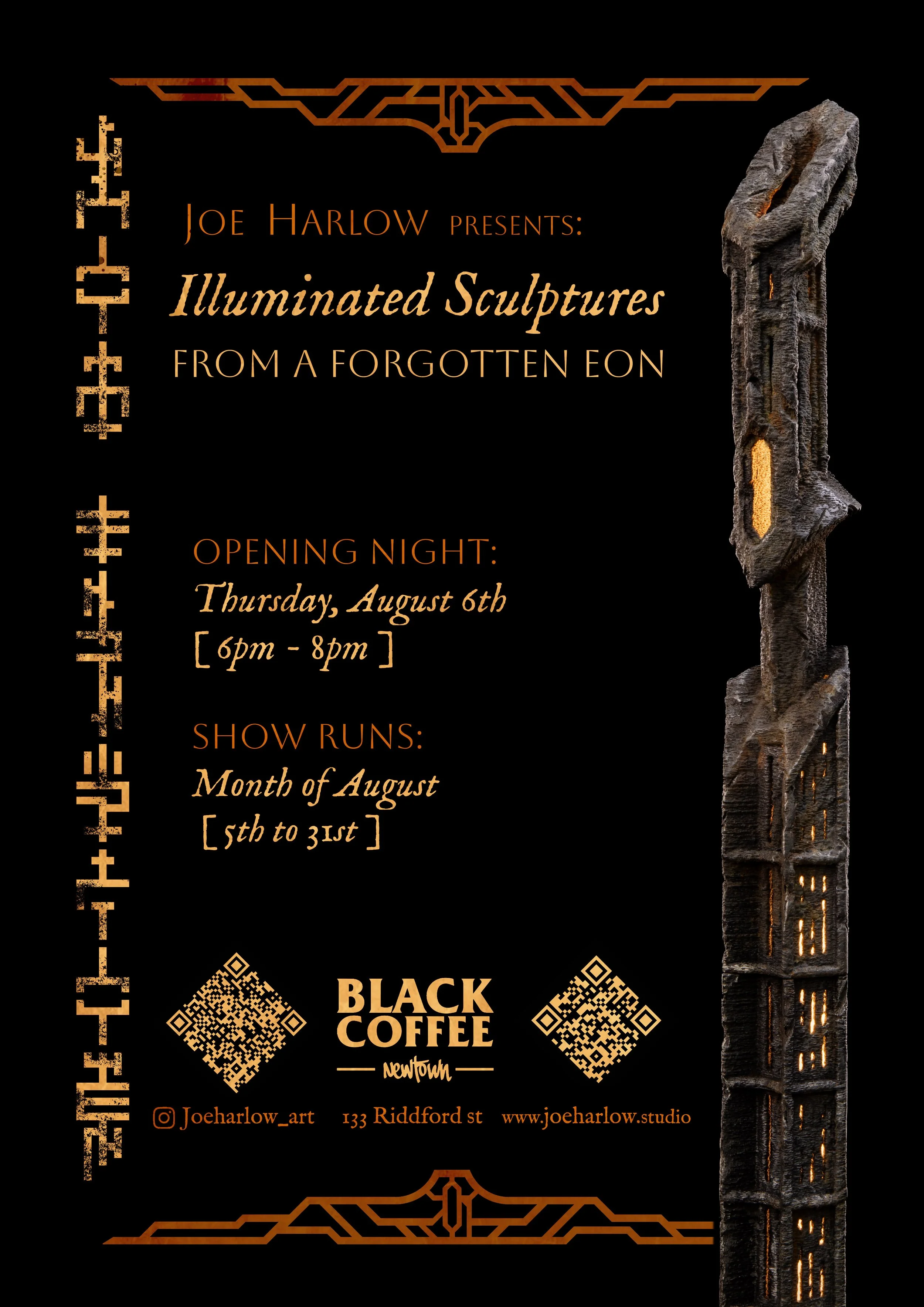
Illuminated Sculptures
from a Forgotten Eon by Joe Harlow

From a Forgotten Eon imagines a primordial Earth as home to an ancient civilisation of geological beings, long before plants, animals or humanity. Rather than designing this world as a finished map, Joe uncovers it piece by piece: through sketches, sculptures, fragments of writing and the demands of each new project. Encounters with Wellington’s creative community, from zine fairs and group exhibitions to games and now this first solo show, provide new deadlines and new ways of seeing it. Each format reveals another object, place or fragments of its history.

Most works begin as drawings before being developed through digital sculpting and design, then 3D printed in Joe’s treehouse studio. Digital tools allow him to test unfamiliar ideas, learn new skills and produce forms at a range of scales. From there, the process becomes physical again: surfaces are textured, components assembled, lights installed and every piece weathered and painted by hand. Combining the two allows the same world to exist at several levels, from accessible small replicas to time-intensive, one off sculptures, lamps and interactive works.

Many of these pieces were first designed to live in Joe’s own home. Flickering light, weathered stone, rusted surfaces and warm timber give them a quiet, earthy presence: part artefact, part lamp and part character. Against Wellington’s dark winter evenings, they offer a small pool of warmth and mystery. This exhibition brings that atmosphere into a shared space, inviting each sculpture to feel not only like something uncovered from a lost world, but like an object that might illuminate a quiet corner of your own.

Artist Bio

Joe Harlow grew up in Yorkshire’s Calder Valley, surrounded by steep wooded hills, old stone towns and the mill chimneys left behind by the Industrial Revolution. Many of these structures still rise above the valley, their stone darkened by generations of soot and weather. That landscape of blackened masonry, monumental structures and nature slowly reclaiming industry continues to influence the forms and atmosphere of his work.

After moving to London, Joe began a career creating practical effects, models, creatures and animatronics for film. Over the next fifteen years, he contributed to productions including Edge of Tomorrow, Guardians of the Galaxy, and Star Wars: Rogue One. His work has taken him from workshops and sound stages to film sets around the world, combining sculpture, engineering, performance and storytelling to help imagined characters and places feel physically real.

Now based in the bush above Wellington, Joe works from a small treehouse studio surrounded by native plants and wildlife. His years at Wētā workshop, working within New Zealand’s creative community on productions including The Creator, Alien Romulus and Sunny have encouraged him to begin telling stories of his own. From this studio, he is developing an ancient imagined world populated by geological beings, forgotten civilisations and machines shaped from stone: fragments of a history that might have existed long before our own.

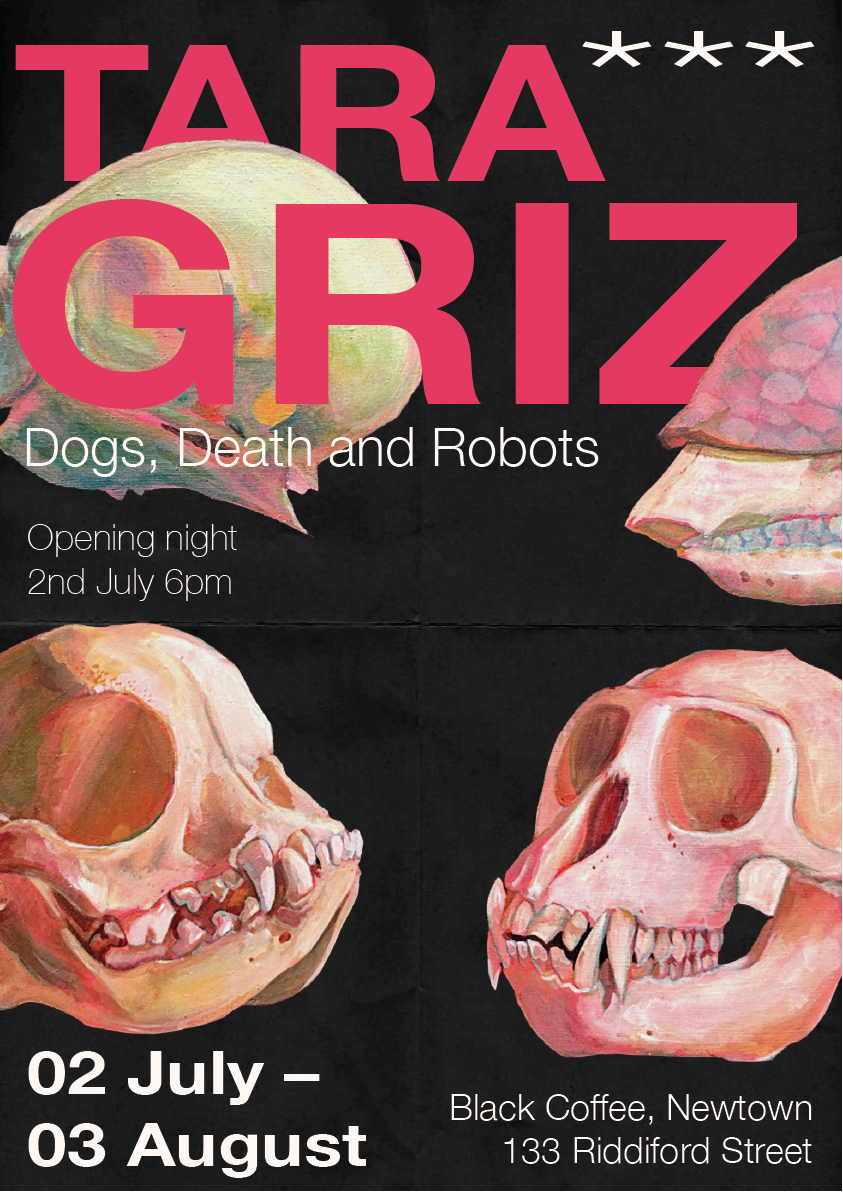
Dogs, Death and Robots by Tara Griz

Tara is an up and coming illustrator, concept designer and fine artist. Her work pushes back against the constraints of what is considered fine art. Tara embraces the joy of creating art, experimenting with vivid colours and dynamic composition. Her work balances fun with technique. 

Dogs, Death and Robots is a body of work created by Griz after finishing university. This transitional phase is a ripe period for growth and reflection, and was the initial inspiration for this exhibition. Drawing on her experience and approaches in fine arts, illustration and concept design the works explore some of her favourite subject matter, colours and techniques, while reconnecting with the sense of agency and fulfillment in creating.

A Radical Jester's Guide to Fashion in a Revolution by Sandy Taing

'A Radical Jester's Guide to Fashion in a Revolution’ is a fibre art extravaganza; a love letter to craftsmanship, creativity and hope. In a world where time is billed, we celebrate having the courage to explore creativity which is bizarre, impractical and slow! It is anathema of a capitalist system; taking back ownership of our time.

I hope you enjoy this blitzkreig of absurdity. I hope it inspires you to spend more time doing things you love and less time as a host for a billionaire parasite. The revolution will not be televised but we will wear it on our backs and light its fire in our homes.

Sandy Taing (STANG) is a multi-media artist whose work navigates social and political turmoil through play, pleasure activism, and punk.  Their current work is oriented around knit and crochet sculpture, fibre artwork and fashion. Fibre art has long been regarded as women’s ‘craft’; undervalued despite the intensive requirements of skill, and time. This medium has an ancient lineage and inherits a legacy of sustainable practice. It is Sandy’s medium of choice because it is anathema to what is demanded in a capitalist system. Sandy believes art and creativity have a key part to play in being a part of a cultural revolution away from an exploitative neoliberal, fascistic capitalism and towards a system in which all people, planet, and beings thrive. 

Real change happens when you engage, please vote!

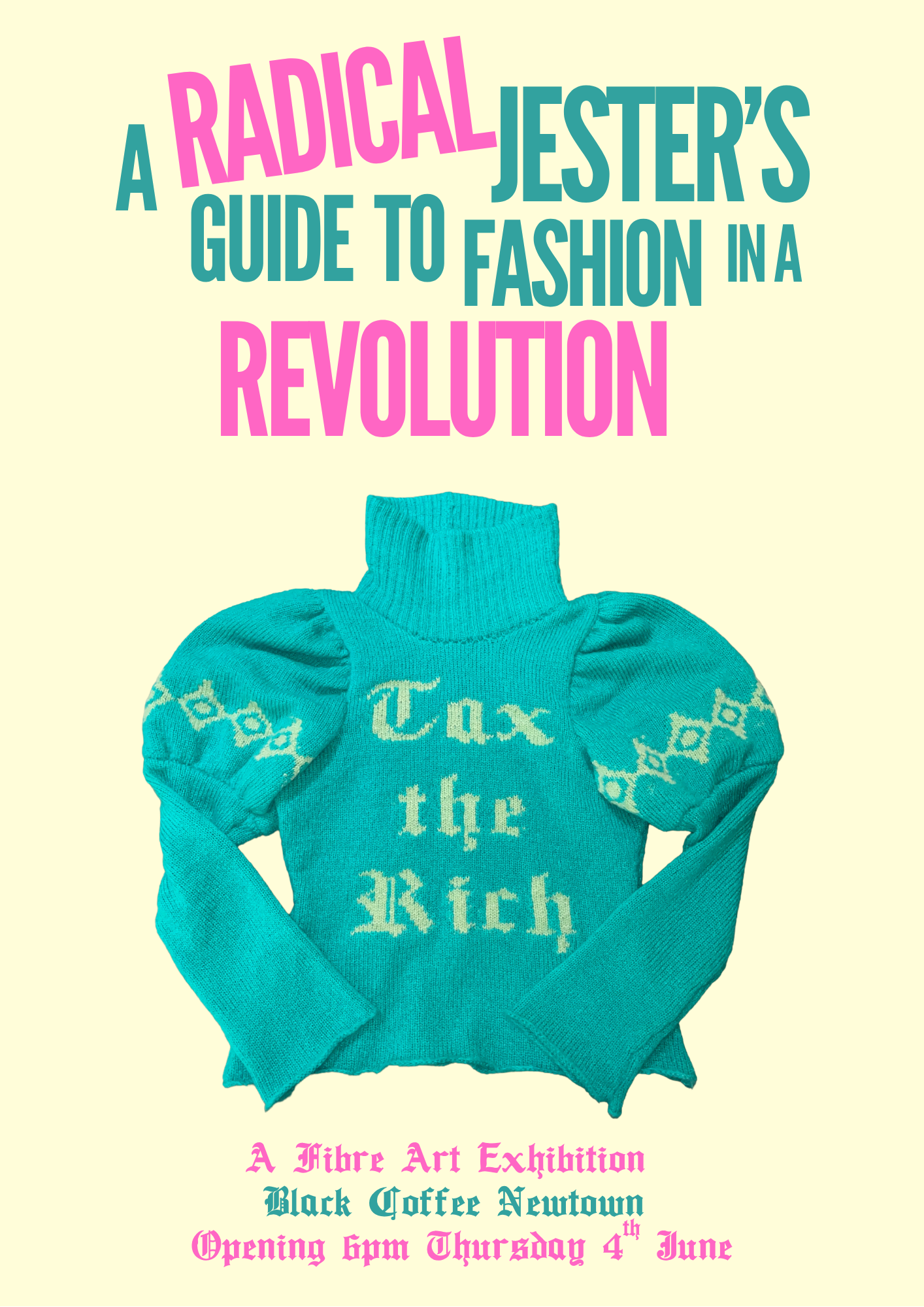
A poster for the exhibition ‘A Radical Jester’s Guide to Fashion in a Revolution.’ The background is butter yellow, and the title of the exhibition is at the top in mint and pink. In the centre is a mint green jumper in a medieval jester style, with puffy sleeves and a high neck, across the front is the text “tax the rich.” At the bottom of the page in an old fashioned font is ‘A Fibre Art Exhibition/ Black Coffee Newtown/ Opening Thursday 4th June.” in pink and mint.

Māori Deaf Vol. 1: Journey by Ryan Cassidy

Ryan Cassidy (Ngāpuhi, Te Rarawa, Ngaāti Kahu, Ngāti Kuri, Ngāti Whātua) is a Turi Māori (Māori Deaf) artist whose work explores identity, language, reclamation and belonging through the layers of Māori and Deaf worlds. Born and raised in Tāmaki Makaurau (Auckland), Cassidy is now based in Te Whanganui-a-Tara (Wellington), where he has lived since November 2025.

Drawing on decades of lived experience, multiple art styles, sign languages, whakapapa exploration and access to te ao Māori, Cassidy’s practice responds to the ongoing challanges faced by Turi Māori including lack of awareness, limited support, tokenism and the ongoing impacts of colonisation.

His work is bold, deeply personal and grounded in lived reality. At its core, Cassidy’s practice is about creating space: space for Turi Māori stories, visibility, language and tino rangatiratanga within contemporary art.

Māori Deaf Vol. 1: Journey is Ryan Cassidy’s first solo exhibition after a long hiatus from art practice and public showing. This deeply personal body of work explores what it means to be both Māori and Deaf in Aotearoa. Through painting, text, sign language, street influences, and mixed visual style, the exhibition reflects a journey marked by identity, determination, heartbreak, loss of hope, resilience and achievement.

The works confront the realities of moving between Māori and Deaf spaces while carrying the weight of invisibility, exclusion, and cultural disconnection. At the same time, the exhibition celebrates survival, whakapapa, resistance and the strength of Turi Māori identity.

Rather than creating art for comfort or decoration, Māori Deaf Vol. 1 speaks honestly from lived experience. Opening space for kōrero, wero (challenge), and visibility for Turi Māori voices within contemporary art.

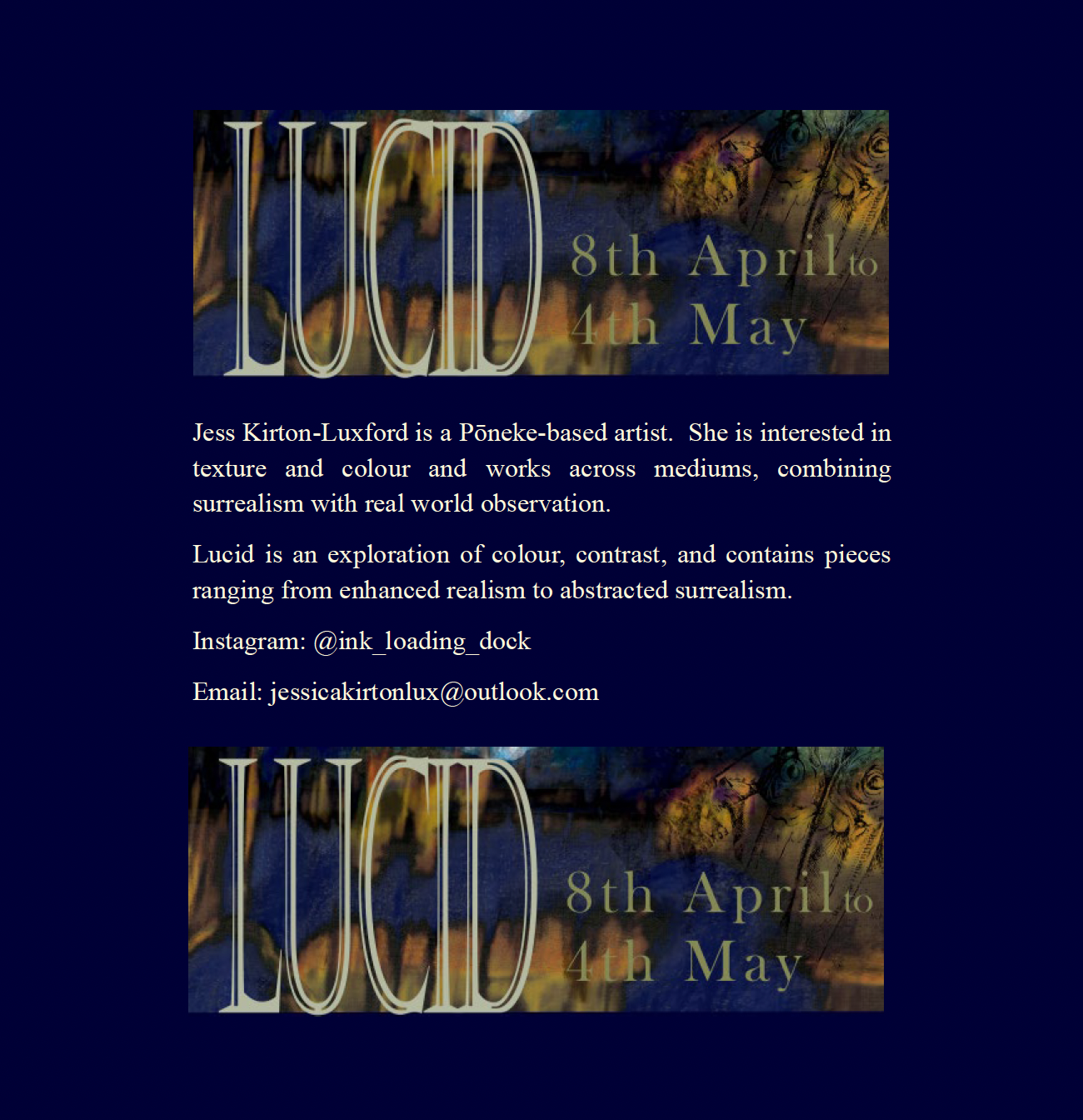
LUCID by Jessica Kirton

Jess Kirton-Luxford is a Pōneke-based artist. She is interested in texture and colour and works across mediums, combining surrealism with real world observation.

Lucid is an exploration of colour, contrast, and contains pieces ranging from enhanced realism to abstracted surrealism.

Instagram: @ink_loading_dock

Email: jessicakirtonlux@outlook.com

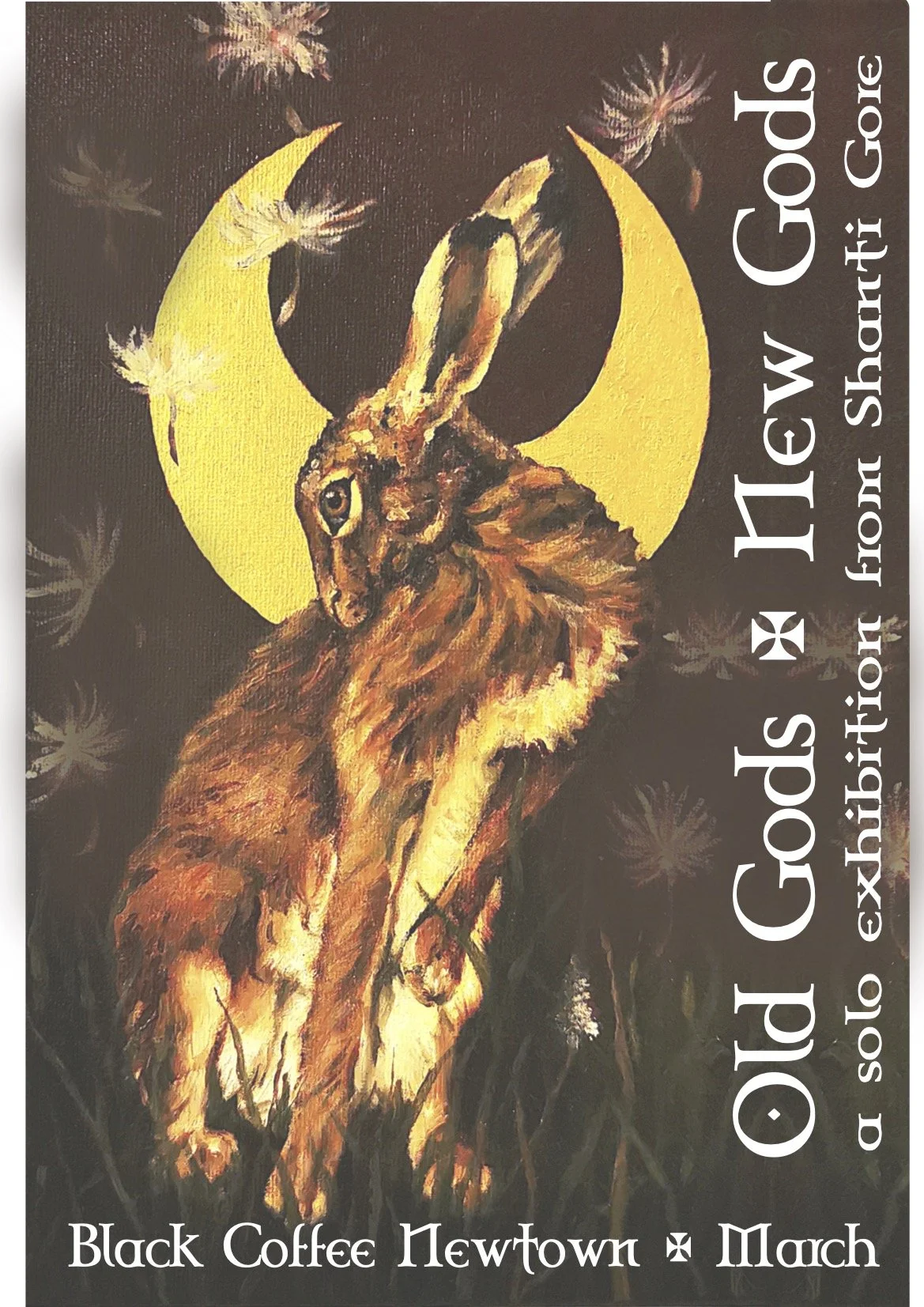
Old Gods New Gods

Shanti Gore is a Wellington-based artist, working across oils, acrylics, watercolours, and linocut printing. Their practice is a rich exploration of natural forms, myth, and visual storytelling. Deeply influenced by gothic literature and 20th-century illustration, their most meaningful works often carry a slightly unsettling, psychological edge — images that speak to the viewer on both conscious and subconscious levels.

Old God New Gods is a study of mythology and folklore, drawing from personas across religious and cultural fables close to the artist's heart. Artworks weave together stories, invoking the anticipation of forces shifting just beyond the visible world. Each piece becomes a threshold—where ancient archetypes brush against contemporary identities. In these layered narratives, the sacred is neither fixed nor forgotten; it is continually rewritten, reshaped, and reborn in the hands of those who dare to look closely.